Darjeeling, often referred to as the “Queen of the Hills,” is a popular hill station in West Bengal, India, nestled in the foothills of the Eastern Himalayas. Famous for its breathtaking views of snow-capped mountains, rolling tea gardens, vibrant cultural heritage, and charming colonial architecture, Darjeeling offers a unique blend of nature, adventure, and history. Here’s a detailed guide to help you plan your Darjeeling tour:
Top Attractions in Darjeeling
-
Day 1: pickup from Bagdogra airport to Pelling
Day 2; Pelling; sightseeing skywalk chenrezig statue, Bird Park, Rabdentse ruins, pemayangtse monastery khecheoperi lake rimbi fall, Kanchendzonga waterfall Overnight Pelling…
Day 3: Pelling to namchi via Ravangla buddha park, samdruptse statue overnight namchi.
Day 4: drive to Gangtok via chardham, temi tea garden then to Gangtok evening free to visit MG Marg.
Day 5: Gangtok sightseeing, Banjhakri waterfall, Ranka monastery, Tashi viewpoint, Ganesh tok, plant conservatory, enchey monastery, Tibetology Museum stupa ropeway overnight Gangtok.
Day 6: excursion trip to changu lake Baba mandir and nathula border .. (nathula border is subject to open as per the government permission to visit) foreign tourist are only allowed up to changu lake.
Day 7: Gangtok to Darjeeling 3-4 hours’ drive check inn hotel evening free to roam around the mall road
Day 8: Darjeeling sightseeing including tiger hill zoo Himalayan Museum, tea garden, toy train, heritage ride, japanese stupa evening free to mall road
Day 9 after breakfast hotel to airport drop. - Tiger Hill
- Best Time to Visit: Early morning for sunrise
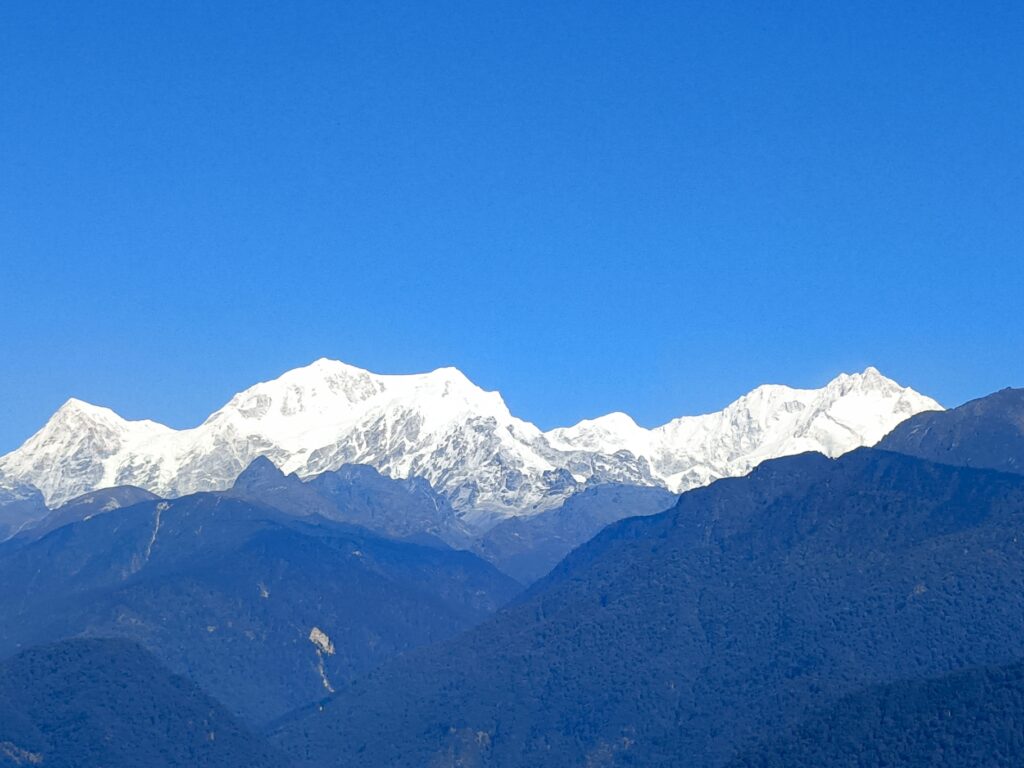
- Highlights: Panoramic views of Mt. Kanchenjunga, and on clear days, a glimpse of Mt. Everest.
Tiger Hill is renowned for its magnificent sunrise views over the Kanchenjunga range. Watching the first rays of sunlight illuminate the snow-clad peaks is a once-in-a-lifetime experience. Tiger Hill is located around 11 km from Darjeeling and is best visited at dawn.
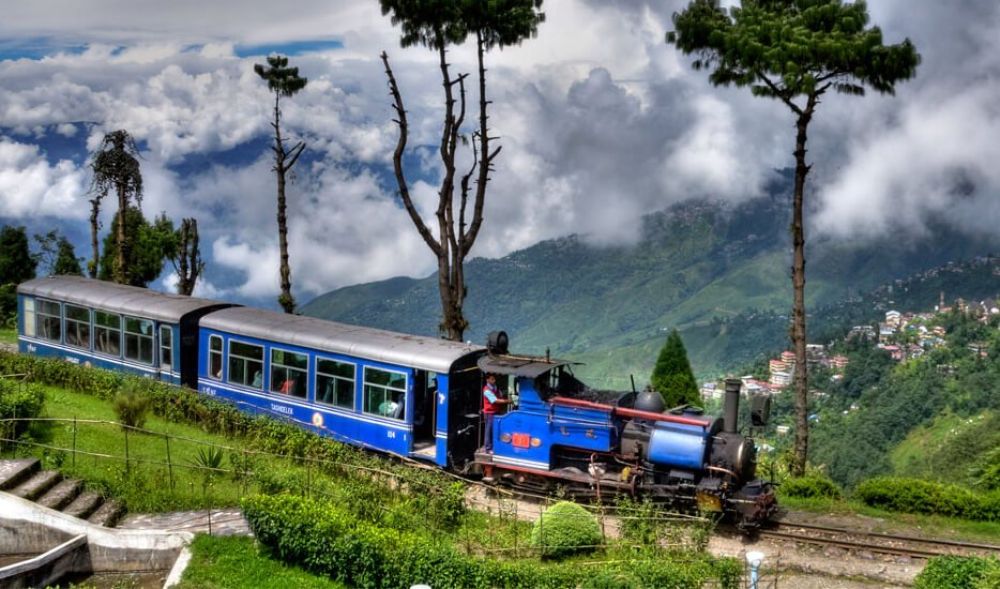
- Darjeeling Himalayan Railway (Toy Train)
- UNESCO World Heritage Site
- Highlights: Scenic ride, cultural heritage.
The iconic Darjeeling Himalayan Railway, fondly known as the Toy Train, offers a unique and scenic journey through the rolling hills and tea gardens of Darjeeling. The train travels from New Jalpaiguri to Darjeeling, offering panoramic views of the Himalayan landscape. The joyride between Darjeeling and Ghum (the highest railway station in India) is particularly popular among tourists.
- Batasia Loop
- Location: En route to Ghum
- Highlights: Stunning spiral railway track, panoramic views of Kanchenjunga, War Memorial.
Located just below Ghum, Batasia Loop is an architectural marvel and a must-visit for train enthusiasts. The spiral railway track allows the toy train to descend the steep gradient, offering spectacular views of the surrounding hills and the Kanchenjunga range. The War Memorial located here is dedicated to Gorkha soldiers.
- Padmaja Naidu Himalayan Zoological Park
- Highlights: Red pandas, snow leopards, Himalayan wolves.
The Himalayan Zoological Park is one of the best high-altitude zoos in India and is home to several endangered species, including the red panda and the snow leopard. The zoo is involved in the breeding and conservation of these rare species and is a great spot for wildlife enthusiasts.
- Himalayan Mountaineering Institute (HMI)
- Highlights: Museum, mountaineering exhibits, training school.
Founded in 1954, HMI is a prestigious mountaineering institute in India that was established to commemorate Tenzing Norgay, the first person (along with Sir Edmund Hillary) to scale Mt. Everest. The museum here showcases various mountaineering expeditions and artifacts related to Everest.
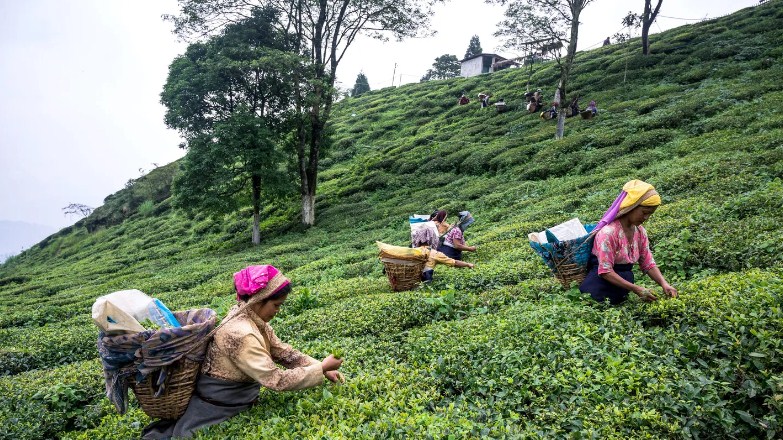
- Darjeeling Tea Gardens Highlights: Scenic tea plantations, tea tasting tours.
Darjeeling is synonymous with its world-famous Darjeeling Tea, often referred to as the “Champagne of Teas.” Visitors can take a tour of the lush tea gardens,
KALIMPONG
Until the mid-19th century, the area around Kalimpong was ruled in succession by the Sikkimese and Bhutanese kingdoms.[10][12] Kalimpong is said to have come under the control of Bhutan in the year 1706.[13] However, according to historians, the Bhutanese encroachments had been in effect for about two decades by then, following the defeat of Gyalpo Ajok and other Lepcha chieftains.[14]
The area was sparsely populated by the indigenous Lepcha and Limbu community and migrant Bhutia and Kirati tribes.[citation needed]

After the Anglo-Bhutan War in 1864, the Treaty of Sinchula (1865) was signed, in which Bhutanese-held territory east of the Teesta River was ceded to the British East India Company.[10][clarification needed] It was administered as the ‘Western Duars’ district for a few years, and divided into three tehsils. Kalimpong fell into the Dalingkot tehsil, which consisted of all the mountainous part of the annexed territory. In 1867, the Dalingkot tehsil was merged with the Darjeeling district, and eventually renamed the Kalimpong Subdivision.[15]
At the time of annexation, Kalimpong was a hamlet, with only two or three families known to reside there.[16] The first recorded mention of the town was a fleeting reference made that year by Ashley Eden, a government official with the Bengal Civil Service. Kalimpong was added to district of Darjeeling in 1866. In 1866–1867 an Anglo-Bhutanese commission demarcated the common boundaries between the two, thereby giving shape to the Kalimpong subdivision and the Darjeeling district.[17]
After the war, the region became a subdivision of the Western Duars district, and the following year it was merged with the district of Darjeeling.[10] The temperate climate prompted the British to develop the town as an alternative hill station to Darjeeling, to escape the scorching summer heat in the plains. Kalimpong’s proximity to the Nathu La and Jelep La passes (La means “pass”) for trading with Tibet was an added advantage. It soon became an important trading outpost in the trade of furs, wools and food grains between India and Tibet.[18] The increase in commerce attracted large numbers of Nepali’s from the neighbouring Nepal and the lower regions of Sikkim, the areas where, Nepali’s were residing since the Gorkha invasion of Sikkim in 1790. The movement of people into the area, transformed Kalimpong from a small hamlet with a few houses, to a thriving town with increased economic prosperity. Britain assigned a plot within Kalimpong to the influential Bhutanese Dorji family, through which trade and relations with Bhutan flowed. This later became Bhutan House, a Bhutanese administrative and cultural centre.[19][20][21]
DOOARS
The Dooars belonged to the Kamata Kingdom under the Koch dynasty;[1] They acted as a trade route between Assam and Bhutan. Assam exports Muga, silk cloth, endi cloth, dried fish and rice and imports consisted of woollen cloth, gold-dust, rock salt, yaktails musk, ponies and blankets from Bhutan.[3]
In the early 17th century, the combined forces of Ahoms and Koches temporarily checked the Bhutia’s transgression. During this period two important Duars on the Darrang frontier, Buriguma and Killing were under Ahoms control. During the Ahom–Mughal conflicts in the mid-17th century, the Bhutias attempted to extend their authority as far as Gohain Kamal Ali road.
In the reign of Ahom king Jayadhwaj Singha, the Druk Desi of Bhutan requested the transfer of these Duars to Bhutan. Therefore, an agreement was drawn, and the Darrang Duars went to the hands of Bhutias on the condition of annual tribute to the Ahoms. The Darrang Duars were also surrendered to Ahoms annually for four months from June to October. These Duars were properties of Ahom government, but the Druk Desi of Bhutan took possession of them in last phase of 18th century when the Ahoms were engaged in internal rebellions.[4]
This region was controlled by the kingdom of Bhutan when British India annexed it in 1865 after the Duar War under the command of Captain Hedayat Ali. Bhutan lost almost one-fifth of its area in this war.[5]
The area was divided into two parts: Western Dooars and Eastern Dooars. The Western Dooars were under the Kingdom of Cooch Behar State from 1586 to 1949, and the Eastern Dooars under the Kingdom of Koch Hajo. Under the Koch government, the officer-in-charge of the Duars were called Subahdar.[6] Similar office existed under the Bhutan government, the Subah was selected by the provincial governors called Ponlops. The Ahom government managed the Duars through Duarieas.[7] The other two Dooars were the Kamrup Duars and Darrang Duars. The Eastern Dooars was merged with Goalpara district in Assam, the Kamrup Dooars was merged with Kamrup district, the Darrang Dooars was merged with Darrang District and the western part was turned into a new district named Western Dooars. Again in the year 1869, the name was changed to Jalpaiguri district.[8]
Best Time to Visit
- Summer (March to May): This is the best time to visit as the weather is pleasant and the skies are clear, offering great views of the mountains.
- Autumn (September to November): Another ideal time to visit Darjeeling, with clear skies and cool weather.
- Winter (December to February): Winters are cold, and while snowfall is rare, the temperature can drop to freezing levels.
- Monsoon (June to September): Darjeeling experiences heavy rainfall during the monsoon, which can lead to landslides, making it less suitable for travel.
How to Reach Darjeeling
- By Air: The nearest airport is PAKYONG Airport or Bagdogra Airport (about 100 km away). From Bagdogra to gangtok..( 25 kms from pakyong Airport to gangtok)
- By Train: The nearest major railway station is New Jalpaiguri (NJP), located around 65 km from Darjeeling. From NJP, you can either take the toy train to Darjeeling or hire a taxi.
- By Road: Darjeeling is well-connected by road to nearby cities like Siliguri, Kalimpong, and Gangtok. You can either hire a private taxi or take shared jeeps and buses.
Where to Stay in Darjeeling
Darjeeling offers a wide range of accommodation options, from luxury resorts to budget-friendly guesthouses. Some popular choices include:
- Contact us for ; accommodation as per your budget
Travel Tips
- Cash Availability: Carry enough cash as ATMs may not always be available in remote areas. upi payments accepts in many places